
Onyx Vanity Tops
- Home
- Case Studies
- Onyx Vanity Tops
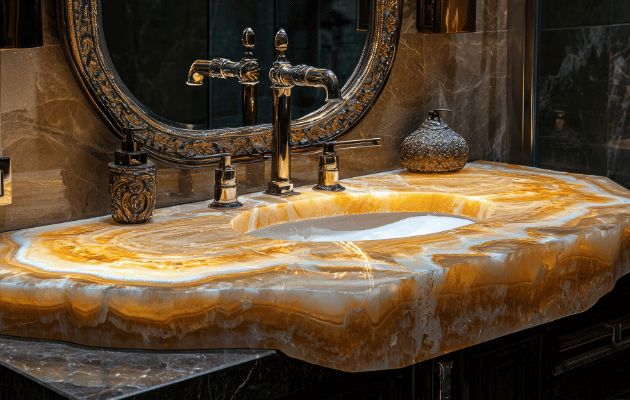 Onyx Vanity Tops
The Setting
In settings like high-end residential bathrooms and boutique hospitality spaces, onyx vanity tops are often chosen as a focal point. The stone’s translucence, dramatic veining, and warm glow—especially when backlit—create a sense of luxury that few materials can match.
These vanities are not just decorative. They’re used daily for handwashing, skincare routines, shaving, makeup application, and general bathroom use. Water, soaps, cosmetics, and cleaning products all come into regular contact with the stone, often multiple times a day.
The result is a surface that looks extraordinary—but lives in one of the most demanding environments in the home.
The Risk or Challenge
Bathrooms may appear gentler than kitchens, but they present their own set of challenges for natural stone. Onyx vanity tops are commonly exposed to:
- Water pooling around faucets and sinks
- Soap residue and mineral deposits
- Cosmetic products with dyes or acids
- Cleaners that are convenient, but not stone-safe
Unlike harder stones, onyx tends to show changes quickly. Dull spots, faint etching, and uneven surface texture often develop gradually, making the stone appear tired long before homeowners expect it to.
Because these changes are subtle at first, they’re easy to dismiss—until the overall finish no longer looks consistent.
Why This Surface Is Vulnerable
Onyx is a calcium-based stone, similar to marble, but typically softer and more porous. Its beauty comes from its mineral composition and layered structure, which also makes it more reactive to acids and moisture.
Polished onyx, commonly used for vanity tops, highlights depth and translucence—but also makes surface changes more noticeable under lighting. Even mild acids found in everyday products can alter the surface at a microscopic level, creating etching rather than staining.
Add in frequent wiping and well-meaning cleaning, and the stone experiences both chemical and mechanical stress. Over time, these factors can lead to uneven wear that’s difficult to reverse without professional intervention.
Where Protection Makes a Difference
A common scenario involves homeowners assuming sealing alone will protect onyx. While sealers can help reduce absorption, they do not prevent etching. Acidic products will still react with the stone’s surface, sealed or not.
This is where proactive, etch-resistant protection changes the equation. When applied thoughtfully, protection acts as a sacrificial barrier—helping shield the stone from everyday interactions that would otherwise alter its surface.
In vanity applications, protection can:
- Reduce visible etching from soaps and cosmetics
- Make routine cleaning safer and more forgiving
- Preserve the stone’s finish and visual depth
- Extend the time between refinishing or restoration
Importantly, this approach doesn’t change the character of the stone. The goal is not to make onyx indestructible, but to help it perform better in the environment it’s actually used in.
Key Takeaway
What’s often overlooked with onyx vanity tops is that the stone isn’t failing—it’s responding naturally to its surroundings. Bathrooms introduce repeated exposure to moisture, mild acids, and cleaning habits that quietly add up over time.
Understanding how onyx behaves allows homeowners and designers to make smarter decisions early. With the right expectations and preventive planning, these striking surfaces can remain elegant and expressive without requiring constant concern or correction.
A Smarter Way to Care for Stone
Understanding your stone surfaces is the first step toward protecting them properly. If you’d like help evaluating your space or learning more about preventive options for vanities, countertops, or other stone features, TriState Stone Protection is here as a resource.
You can reach us through our Contact Us page or speak with our team at (516) 760-3538.