
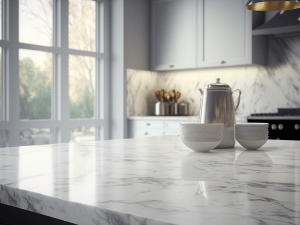
Marble is often chosen for the same reasons people choose fine wood or leather: it has character, depth, and a sense of permanence. But once it’s installed—whether in a residential kitchen or a commercial space—questions about care quickly follow. One of the most common points of confusion is the difference between marble sealing and marble protection.
They’re often spoken about as if they’re interchangeable. They’re not.
Understanding what each one does—and just as importantly, what each one doesn’t do—helps homeowners and commercial decision-makers make better long-term choices for their stone surfaces.
What Marble Sealing Actually Does
Sealing marble is primarily about managing absorption.
Marble is a porous stone. A sealer is designed to slow down how quickly liquids penetrate the surface. This gives you more time to wipe up spills before they turn into stains.
Sealing helps with:
- Oil-based spills
- Food and beverage staining
- Moisture absorption in bathrooms and wet areas
What sealing does not do is change how marble reacts chemically. A sealed surface can still be altered by acidic substances.
This distinction is critical—and often misunderstood.
Why Sealing Doesn’t Prevent Etching
Etching occurs when acids react with calcium-based stone. This reaction happens at the surface level and doesn’t depend on absorption.
That’s why a freshly sealed marble countertop can still show dull spots after contact with lemon juice, wine, or vinegar. The sealer may slow staining, but it doesn’t stop chemistry.
In professional stone care, this is one of the most common sources of frustration. The stone was sealed properly, yet etching still occurred. The issue isn’t the sealer—it’s expectations.
What Marble Protection Addresses Instead
Marble protection focuses on surface performance, not just absorption.
Rather than working deep within the pores, protection is designed to make marble more etch resistant—reducing how easily the surface reacts to everyday acidic exposure.
The goal isn’t to eliminate etching entirely. Marble can’t be made completely etch proof without changing its nature. The goal is to make the surface more forgiving, predictable, and practical for real use.
Importantly, effective protection does this without:
- Changing the look of the stone
- Creating a plastic or coated feel
- Altering the natural finish
The stone still looks and feels like marble—it simply behaves better under normal conditions.
Sealing vs. Protection: A Simple Comparison
While both play a role in care, they address different risks:
- Sealing helps reduce staining by slowing absorption
- Protection helps reduce etching by improving surface resistance
One manages what soaks into the stone.
The other manages what happens at the surface.
In many environments, sealing alone is only part of the solution.
Why This Matters in Real Spaces
In residential kitchens, sealing helps with oils and food spills. Protection helps homeowners cook, entertain, and live without constant concern over acidic contact.
In commercial settings—bar tops, vanities, service counters—etch resistance becomes even more important. Alcohol, citrus, cleaners, and repeated use increase exposure. Protection helps control wear and maintain consistency over time.
In both cases, the goal isn’t perfection. It’s reliability.
When Sealing Is Enough—and When It Isn’t
There are situations where sealing alone may be sufficient:
- Low-use decorative surfaces
- Areas with minimal exposure to acids
- Homes where marble is treated very carefully
But for surfaces that see regular use—especially kitchens, bathrooms, and commercial spaces—sealing without protection often leads to disappointment. The stone isn’t failing. The strategy is incomplete.
Care Still Matters Either Way
No approach replaces thoughtful care.
Even protected marble benefits from:
- pH-neutral cleaners
- Avoiding acidic or abrasive products
- Reasonable spill cleanup
- Understanding how polished and honed finishes behave differently
Protection supports good care; it doesn’t replace it.
A Clearer Way to Think About Marble Care
Sealing and protection aren’t competing ideas. They address different vulnerabilities.
Sealing helps manage stains.
Protection helps manage etching.
When the distinction is understood, marble becomes easier to live with and easier to maintain—without unrealistic expectations or constant worry.
For those who value quality, longevity, and honest guidance, that clarity makes all the difference.