
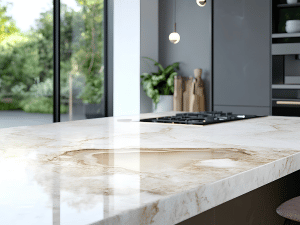
Marble is elegant, timeless, and naturally beautiful. But if you’ve researched marble countertops, you’ve likely heard the warning:
“Marble etches.”
So the real question is:
Can marble actually be made etch proof?
Standard penetrating sealers do NOT prevent etching. Only specialized, professionally applied acid-resistant protection systems can provide true etch resistance.
Let’s clear up the confusion.
What Is Marble Etching?
Etching is not a stain.
Etching occurs when acidic substances react chemically with calcium-based stones like marble, limestone, and travertine. The acid alters the surface itself, leaving behind:
- Dull spots
- Light rings
- Surface marks
- Loss of polish
Common causes include lemon juice, vinegar, wine, tomato products, coffee, and many household cleaners.
Because etching is surface damage — not absorption — it cannot simply be wiped away. It requires professional refinishing to restore the finish.
Why Sealing Marble Is Not Enough
Most marble countertops are protected with a penetrating sealer.
Penetrating sealers are designed to reduce staining by slowing liquid absorption into the stone’s pores. They help with oil-based and pigmented spills.
However, etching is not caused by absorption.
It happens when acid contacts the surface. A penetrating sealer does not create an acid-resistant barrier, which is why marble can still etch even if it has been freshly sealed.
This is one of the most common misunderstandings in stone care.
What Actually Makes Marble Etch Resistant?
True etch protection requires a specialized surface treatment engineered specifically for acid resistance.
Unlike traditional sealers, advanced protection systems create a protective layer at the surface level. When professionally installed, these systems can dramatically reduce — and in many everyday situations prevent — acid-related etching.
With proper preparation and application, marble can become:
- Highly resistant to household acids
- Easier to maintain
- More practical for kitchens, baths, and entertaining spaces
This is not a DIY solution. Professional preparation and installation are essential to performance and longevity.
Is Marble Completely Etch Proof?
No natural stone can be made completely indestructible.
However, with the right protective system, marble can perform very differently than untreated stone. Instead of worrying about every spill, homeowners can enjoy the beauty of marble with confidence.
That’s the difference between basic sealing — and true surface protection.
Frequently Asked Questions
Q. Does sealing marble prevent etching?
A. No. Traditional penetrating sealers help prevent stains, but they do not stop acid from reacting with the surface.
Q. What causes marble to etch?
A. Acidic substances like lemon juice, vinegar, wine, tomato sauce, and certain cleaners react with the calcium in marble and dull the surface.
Q. Can etched marble be repaired?
A. Yes. Etching can typically be professionally honed or polished to restore the finish.
Q. Is etch protection worth it for kitchen countertops?
A. For many homeowners, yes. Kitchens are high-exposure areas where acids are common. Proper protection can significantly reduce damage and long-term maintenance costs.
Q. How long does professional marble protection last?
A. Longevity depends on usage and maintenance, but professionally applied protection systems are designed to provide durable, long-term performance.